
Designing Without Cameras: Building Trust Through Predictive UX for Senior Care
A deep dive into how we designed CarePredict's camera-free monitoring interface —translating wearable data into calm, human-centred insights for caregivers and families.
Project linkMost senior monitoring systems force families to make a difficult choice: respect their loved one's privacy or guarantee their safety. Traditional camera-based systems feel invasive and strip away dignity, while standard medical wearables flood caregivers with raw, unreadable data that often leads to severe alert fatigue rather than proactive care.
That’s where CarePredict shifts the paradigm. By relying entirely on wearable IoT data rather than cameras, we designed an interface that translates continuous health telemetry into calm, human-centered insights. Instead of just sounding alarms during emergencies, the platform helps caregivers and families understand daily behavioral patterns—like sleep quality, walking pace, or meal habits—empowering them to predict and prevent health issues before they ever escalate.
My Approach
To build an effective, camera-free monitoring experience, I took a systems-thinking approach—blending data visualization, healthcare operations, and predictive UX to create the CarePredict dashboard.
1. Understanding Users & Their Needs
I mapped out the daily workflows of both facility caregivers and concerned family members. The key takeaways? Facility staff suffered from massive "alert fatigue" and needed to know exactly who to check on instantly. Families, on the other hand, wanted peace of mind without feeling like they were spying on their parents.
2. Defining the Problem & AI-Driven Solutions
From the research, three major challenges emerged:
- Raw data is overwhelming - Caregivers need actionable insights, not complex spreadsheets of vital signs.
- Care is purely reactive - Systems typically alert staff after an emergency (like a fall) instead of preventing it.
- The Privacy Compromise - Residents deserve dignity, meaning cameras were completely out of the question.
The solution was a predictive UI that acts as an intelligent filter between the wearable hardware and the human caregiver.
3. Designing the Command Center
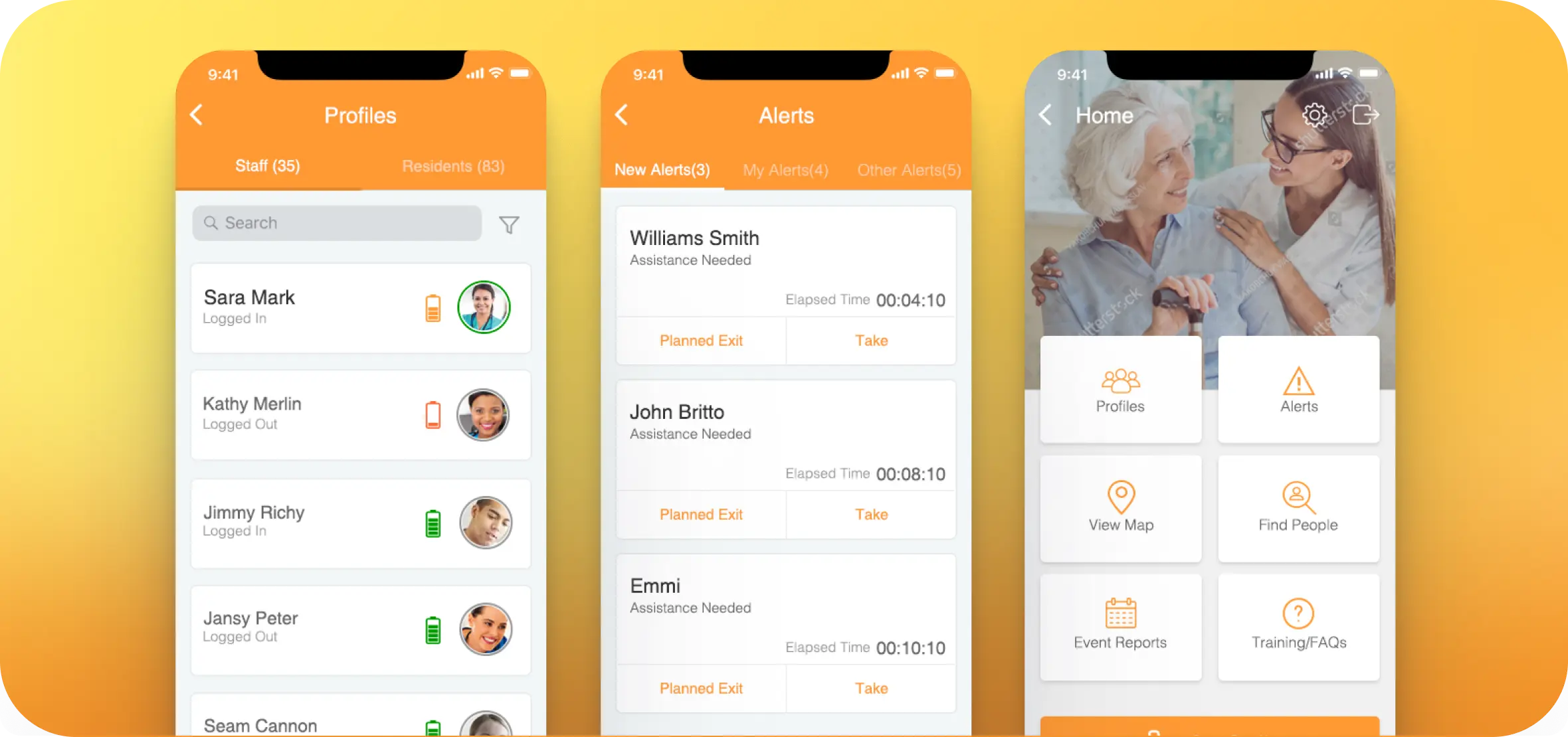
I structured the dashboard to prioritize immediate action and "signal over noise":
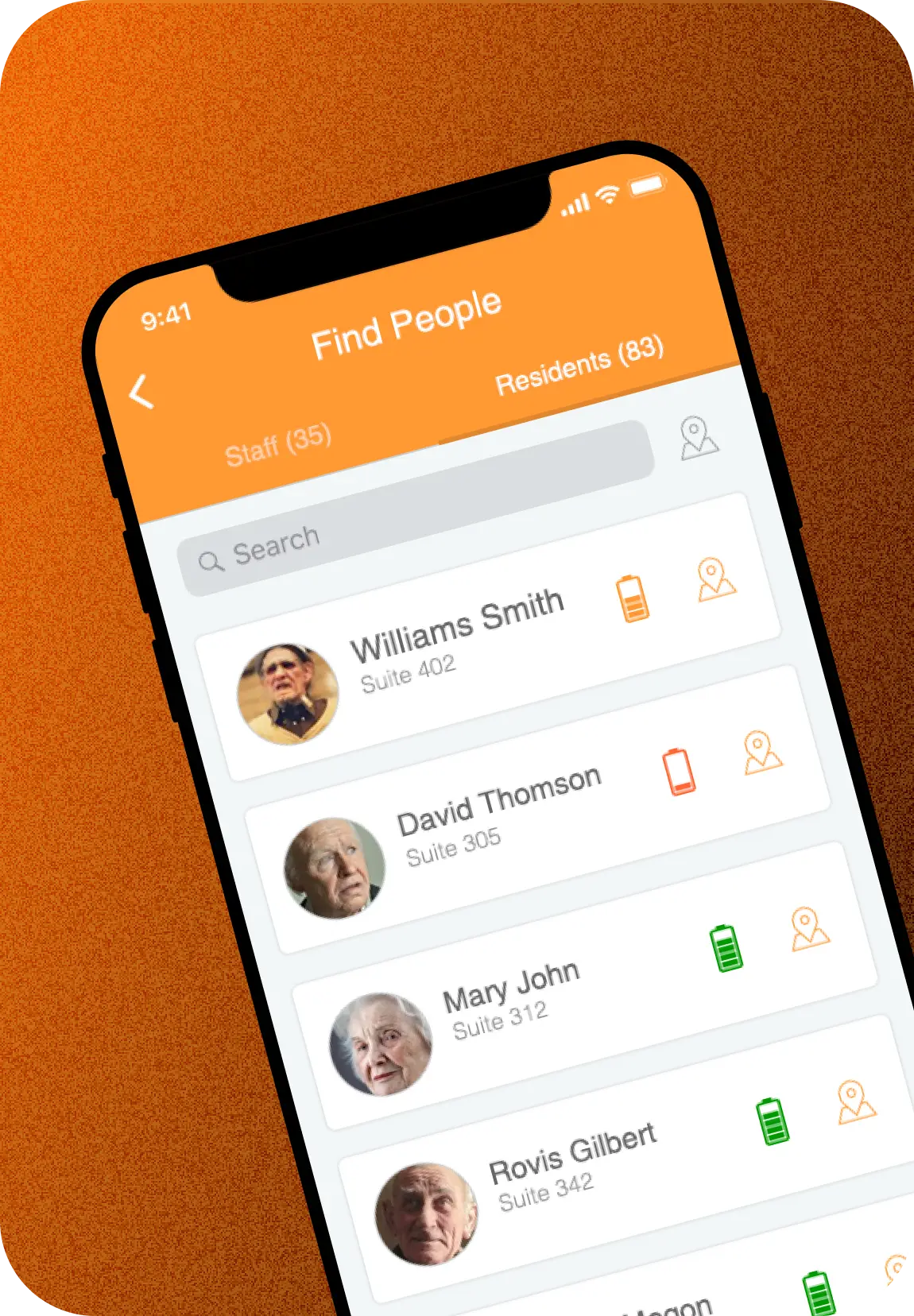
- Behavioral Translation → Converted raw IoT metrics into simple, recognizable daily activities (sleeping, eating, walking).
- Predictive Alerts → Created visual indicators for subtle behavioral deviations to prevent emergencies before they happen.
- Role-Based Views → Designed separate, optimized interfaces tailored for on-the-floor staff, administrators, and family members.
4. Testing & Refining the Experience
Testing the interface with actual nursing staff helped us evaluate cognitive load in high-stress environments. This led to:
- Color-Coded Hierarchy → Instantly prioritizing residents who need urgent attention to reduce staff anxiety.
- Simplified Wayfinding → Improving the indoor location mapping so staff can locate moving residents faster.
- Tailored Family Trust → Adjusting the family app's language to provide reassurance without overwhelming them with medical jargon.