00
Sri AI

Designing the leading DeFi platform on Tezos — from zero to $1B+ in protocol volume

As the sole product designer at Plenty Network, I owned the end-to-end design of a DeFi ecosystem on Tezos — from initial research and concept through three major product versions. The challenge was to make genuinely complex financial interactions — swaps, staking, liquidity provision, and governance — feel approachable without stripping away the depth that experienced DeFi users expect. The platform went on to become the leading AMM on Tezos, facilitating over $1 billion in lifetime protocol volume.

Live link

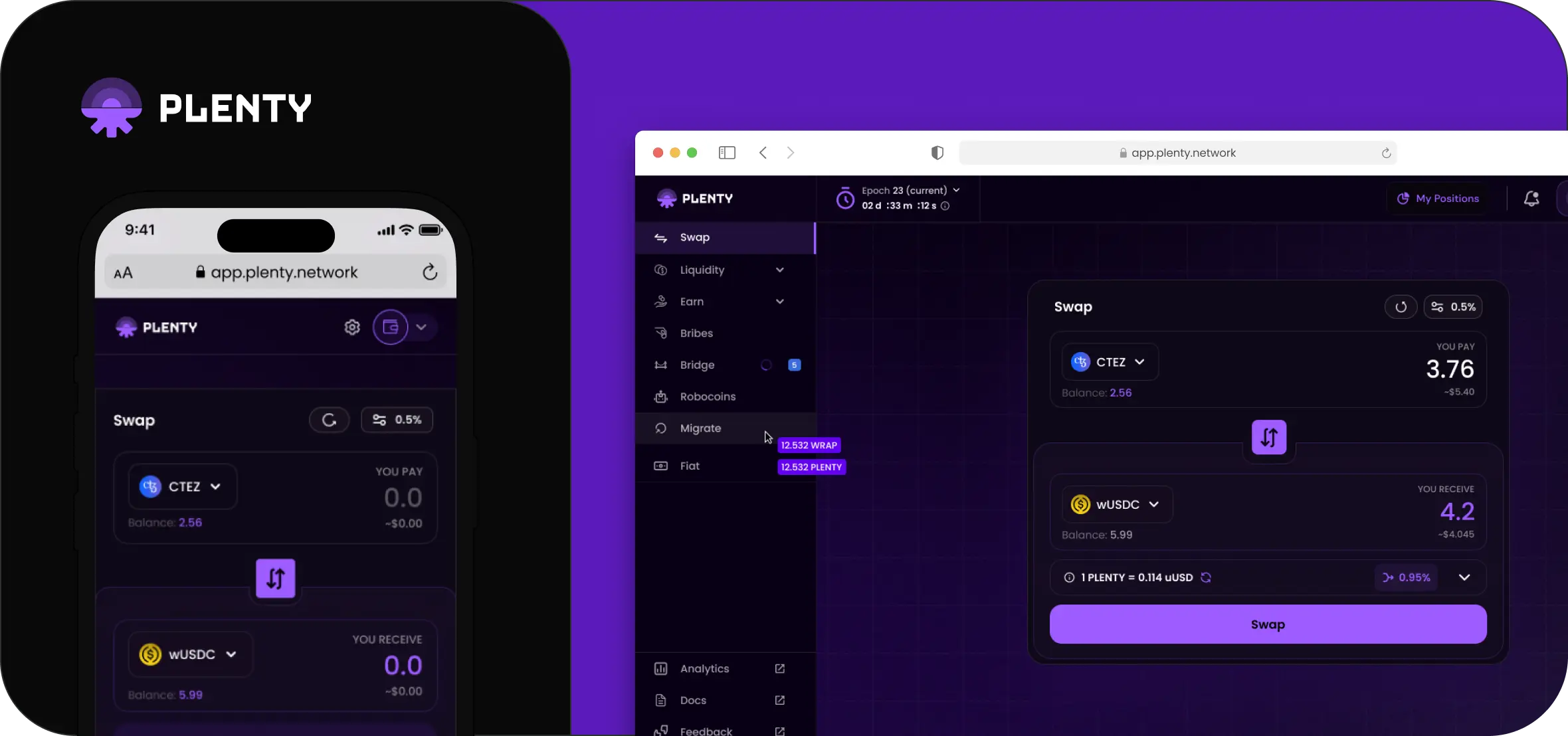
Plenty DeFi Platform Overview

Context

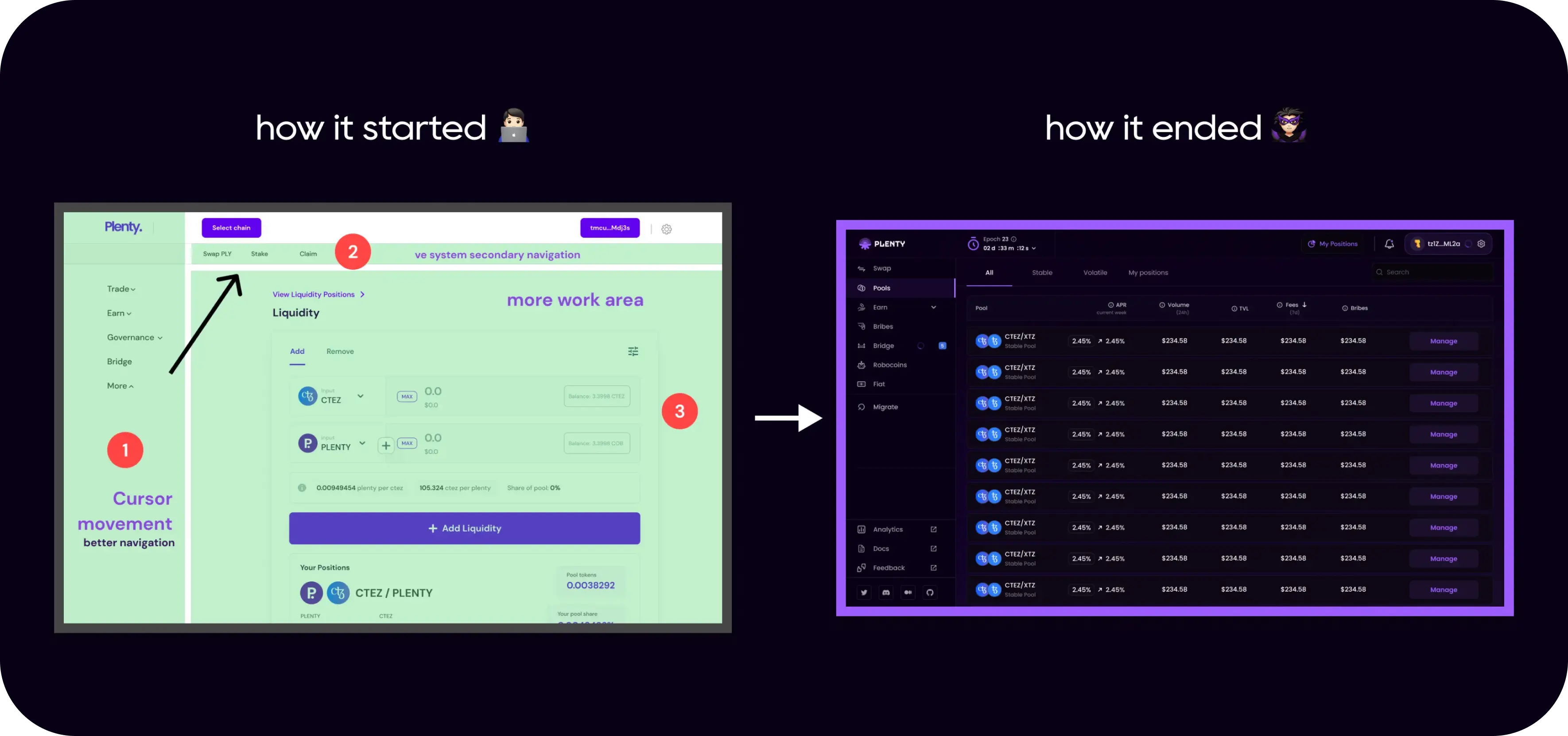
Plenty Network’s journey from a basic AMM to a full-fledged DeFi ecosystem on Tezos was an exciting challenge as a Product Designer. Plenty V1 (https://old.plentydefi.com/) introduced token swaps but lacked advanced liquidity management and incentives. While it laid the foundation, the platform needed a more intuitive and rewarding experience to drive engagement.

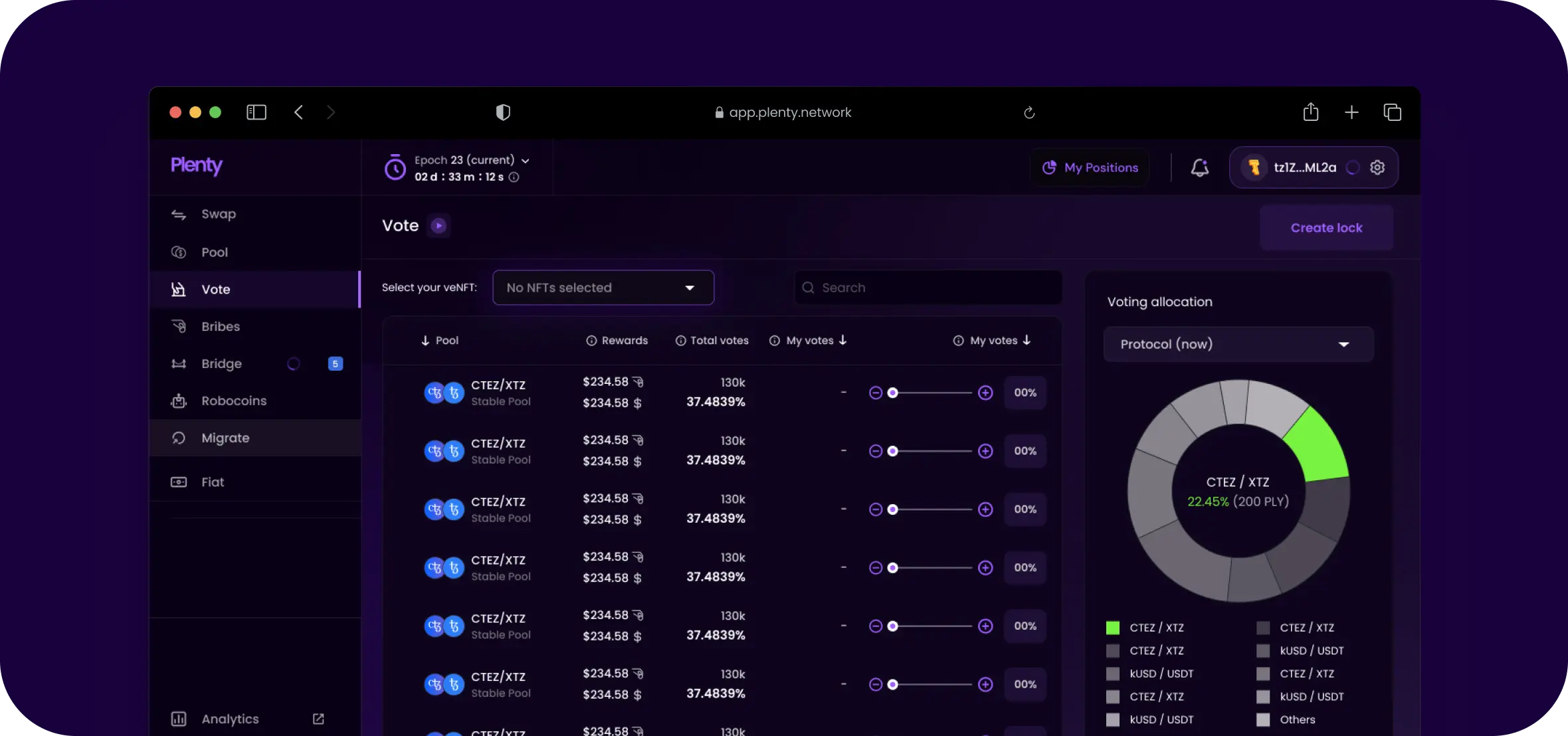
With Plenty V2 (https://app.plenty.network/swap?from=XTZ&to=), the focus shifted toward staking, governance, and liquidity incentives, making DeFi interactions more accessible while retaining depth for advanced users. Plenty V3 refined these mechanisms further, optimizing incentives, governance, and scalability for liquidity providers and protocol builders.

Beyond functionality, branding and UX played a key role in building trust and engagement in the Web3 space. This journey was an incredible learning experience in merging DeFi mechanics with user-centered design.
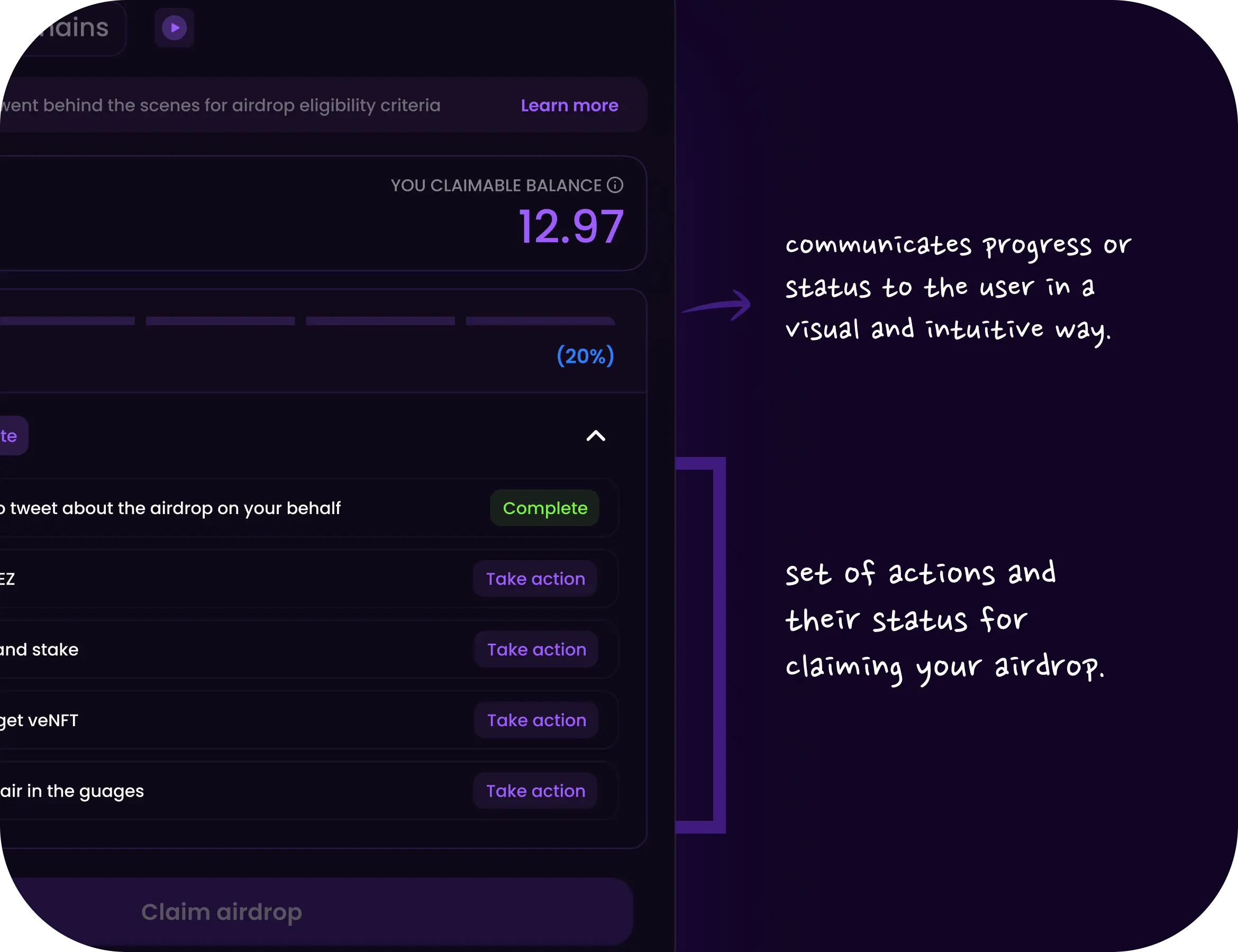
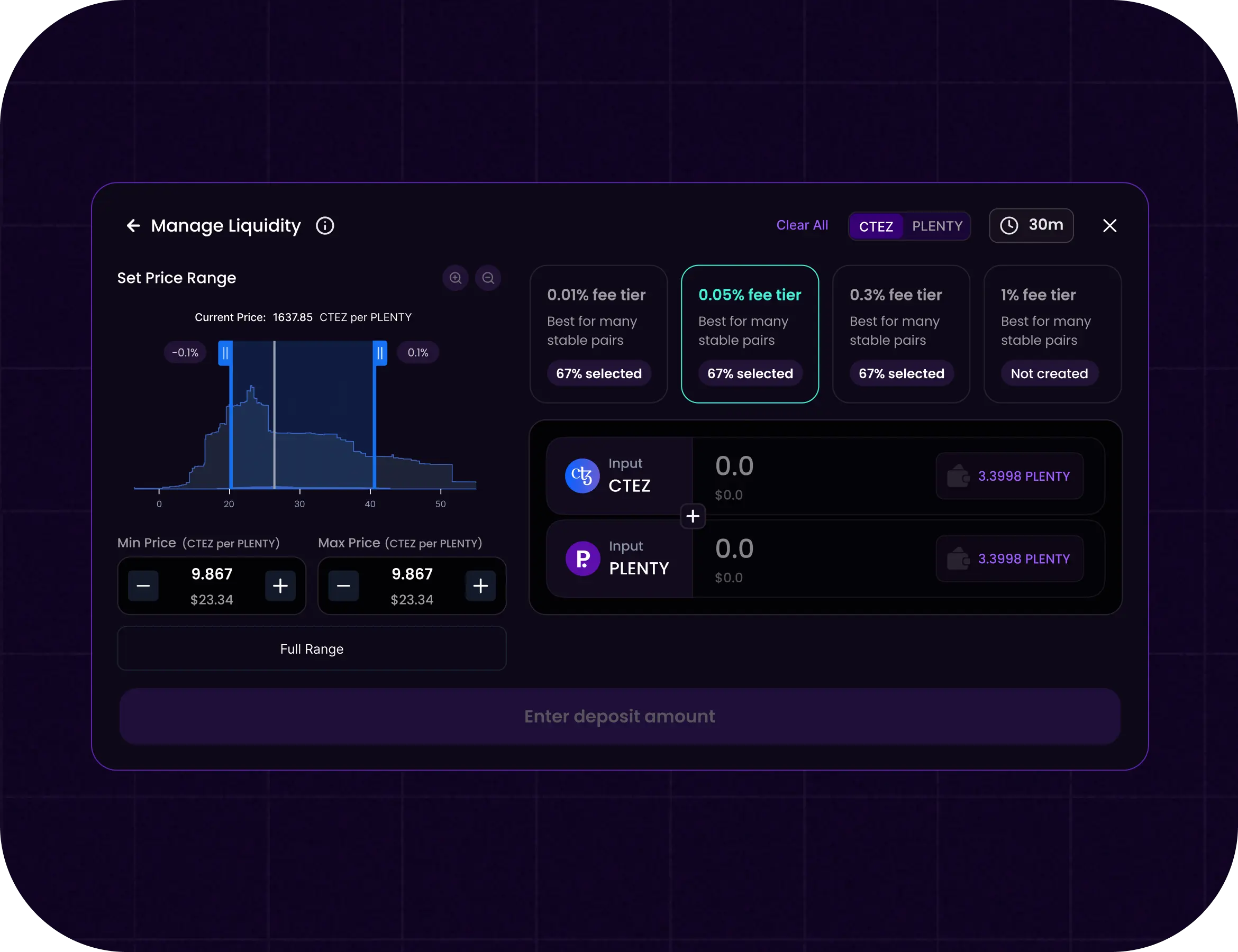
claim
manage liquidity

My Approach

1. Identifying the Opportunity in DeFi UX:
The AMM space was dominated by Uniswap, PancakeSwap, and linch, but Tezos lacked a truly user-friendly AMM. This was an opportunity to create an intuitive, accessible, and efficient DeFi experience—one that simplified complex financial interactions while still offering depth for advanced users.

2. Research and Competitor Analysis:
To bridge this gap, I conducted user research, competitor analysis, and HMW workshops with the founding team. Studying platforms like Uniswap helped identify best practices, while sessions with Tezos users and DeFi participants surfaced pain points in navigation, liquidity management, and governance participation.

3. Designing for Clarity and Accessibility
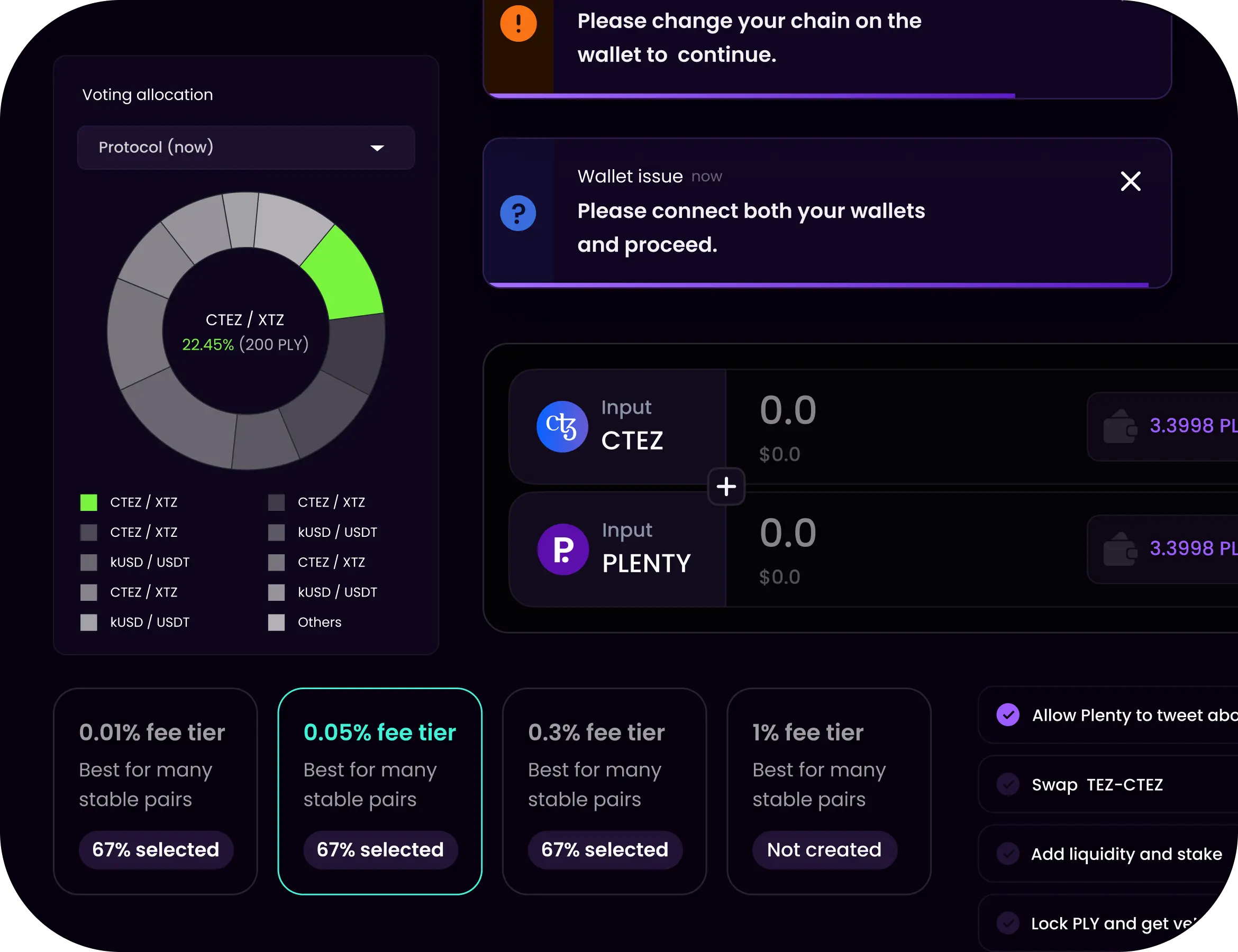
The focus was on step-by-step guidance, intuitive layouts, and real-time feedback, making interactions seamless for both new and experienced users. A mobile-responsive design ensured easy access across all devices, reducing friction in trading, staking, and governance participation.

4. Building a Scalable Design System:
I built a standardized design system from scratch — covering UI components, interaction patterns, and branding — to keep the platform consistent and scalable across three product versions and a fast-moving development cycle.

5. Strengthening Plenty’s Brand Identity:
Beyond UX, brand positioning played a key role. A refined visual identity, clearer messaging, and a more engaging website helped establish Plenty as a leading DeFi platform on Tezos, boosting its visibility and adoption.

Plenty Results Overview

Results

Plenty Network became the leading AMM on Tezos — built entirely from scratch by a sole designer across three major product versions. By making complex DeFi interactions approachable without sacrificing depth, the platform grew to facilitate over $1 billion in lifetime protocol volume and establish itself as the go-to decentralized exchange on the network.

icon

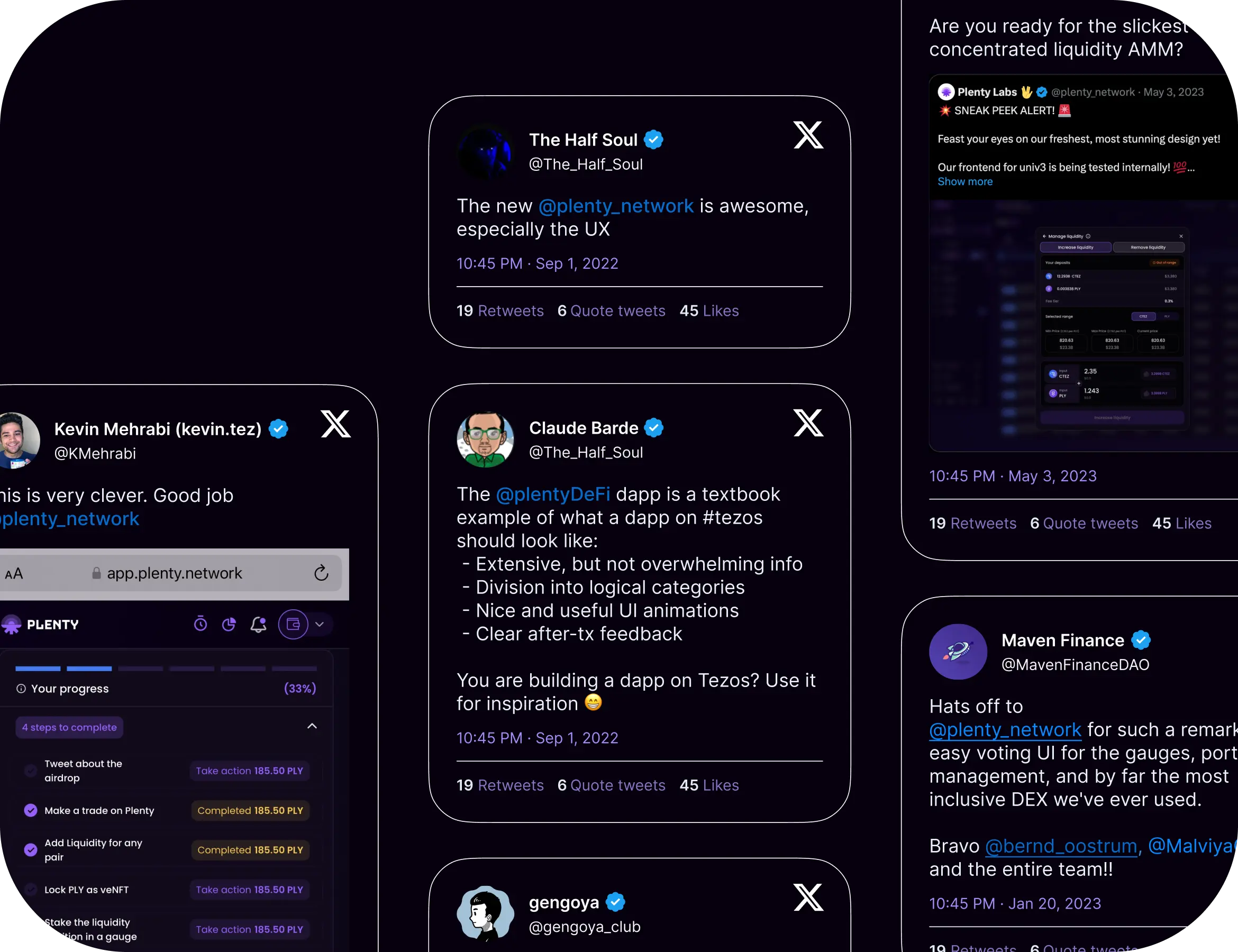
User-centric branding established Plenty as a leading Web3 AMM competitor.

icon

Simplified onboarding drove DeFi adoption and
long-term liquidity.

Figma

Request for Figma Prototype here

$1B+

protocol volume facilitated
adoption

200%

improvement in task
completion rates

  • check Became the leading AMM on Tezos — Plenty Network established itself as the go-to decentralized exchange on the network, facilitating over $1 billion in lifetime protocol volume across swaps, staking, and liquidity provision
  • check 200% boost in user engagement – Enhanced staking, governance, and liquidity management features resulted in higher platform activity.
  • check Expanded Plenty's presence in the Web3 space – The improved branding and user-centric approach positioned Plenty as a strong competitor in the AMM market.
  • check Built a scalable design system from zero — – Standardized UI components, interaction patterns, and branding that enabled consistent iteration across a fast-moving DeFi product, establishing a visual and interaction language that persisted across all three versions.
Plenty Before&After

This project validated the power of human-centered design in DeFi, proving that a well-crafted UX can drive adoption in blockchain ecosystems. By bridging the gap between complex DeFi mechanics and intuitive user experiences, Plenty became a leading DeFi product on Tezos.

Result Detail 1
Result Detail 2